-
News | Real Estate
Is Now a Good Time to invest Dubai Real Estate?
Dubai’s property market entered 2026 with strong momentum. Early figures show over AED 110 billion in real estate transactions recorded in January, according to the Dubai Land Department. Sales activity remains high and international buyers continue to enter the market from Europe, Asia, and Africa.
Yet the tone among new investors is cautious. Global headlines around economic conditions and regional tensions create uncertainty. Some buyers pause and wait for signals before making decisions.
Seasoned investors often read the market differently. They understand that property data does not move instantly. Real transactions often reflect decisions made 60 to 90 days earlier. That delay matters.
When headlines create uncertainty, many buyers step back. During that pause, pricing pressure can ease and developers offer flexible payment plans. Investors who study market fundamentals during these moments often find stronger entry conditions.
Dubai Real Estate Continues to Show Strong Deal Activity
Despite geopolitical concerns across parts of the region, Dubai’s property market continues to record strong deal flow.
According to Farhad Azizi, Group CEO of Azizi Developments, property transactions worth over $100 million are being signed daily in Dubai. This level of activity signals deep investor confidence in the city’s real estate sector.
Dubai’s property system has developed strong institutional trust over the past decade. Several factors support this confidence:
- Transparent property regulations
- Digital land registration systems
- Investor protection frameworks
- Stable banking and financial infrastructure
These elements give global buyers clarity and security when entering the market.
While other global cities experience volatility, Dubai continues to attract international capital looking for stability and long term value.
Why Market Sentiment and Transaction Data Often Move at Different Speeds
Real estate markets rarely react instantly to news cycles.
A property transaction usually takes several weeks to complete. Buyers conduct project reviews, evaluate pricing, and arrange financing. Because of this process, recorded sales often reflect decisions made earlier.
In many markets, the gap between sentiment and recorded transactions can reach 60 to 90 days.
During this period several patterns often appear:
- Buyer enquiries slow slightly
- Off-plan resale activity softens
- Developers maintain project launches and payment plans
This creates a temporary gap between perception and fundamentals.
Investors who react emotionally often miss opportunities. Investors who track real market indicators often act during these quieter periods.
Off-Plan Resale Activity May Slow in the Short Term
Over the next few months, analysts expect off-plan resale activity to slow slightly.
This slowdown does not signal weak demand. Instead it reflects caution among short-term investors waiting for clearer signals.
Developers continue to move forward with new launches and construction schedules. Payment plans remain available and new phases continue entering the market.
This situation often creates favorable buying conditions:
- Less competition among buyers
- More flexibility in negotiations
- Greater availability of payment plans
For long term investors, this period can improve entry positioning.
The Gap Between Fear and Market Fundamentals
Property markets often move through cycles of optimism and hesitation.
During uncertain periods, many investors focus on short term risks. Yet the underlying drivers of Dubai’s property market remain strong.
Key fundamentals supporting the market include:
- Population growth across the UAE
- Continued migration of global entrepreneurs and professionals
- Large scale infrastructure expansion
- Growth in tourism and international business activity
- Stable currency linked to the US dollar
Dubai’s population is expected to approach 4 million residents before 2028, which will continue to support housing demand.
When these structural factors remain strong, short term sentiment shifts rarely change the long term growth path.
Where Investors Are Focusing in 2026
Professional investors tend to concentrate on areas where demand, infrastructure, and long term growth align.
Three categories currently attract the most attention.
Master Communities with Established Infrastructure
Large master developments continue to attract both investors and end users.
Examples include:
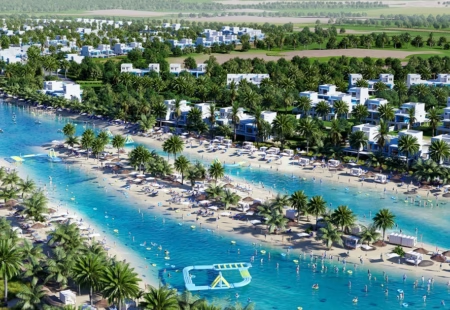
- Dubai Hills Estate
- Dubai Creek Harbour
- Emaar South
- Mohammed Bin Rashid City
These communities provide schools, parks, retail areas, and strong transport links. Buyers prefer complete neighbourhoods where daily life is convenient.
Premium Residential Towers in Core Districts
Central districts with strong global recognition remain stable during market shifts.
Areas receiving strong investor attention include:
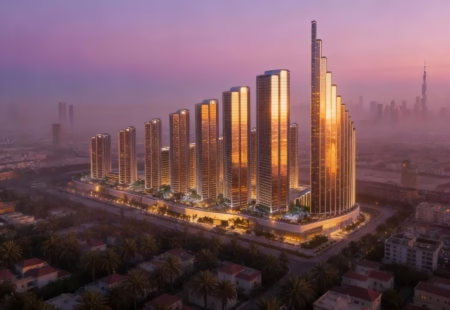
- Downtown Dubai
- Dubai Marina
- Business Bay
- Palm Jumeirah
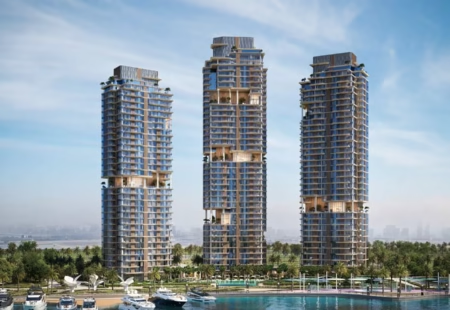
Well designed towers with strong developer reputation and attractive views often maintain strong demand.
Abu Dhabi’s Expanding Investment Corridors
Abu Dhabi is also gaining investor attention as developers introduce new residential projects.
Key locations include:
- Yas Island
- Saadiyat Island
- Al Reem Island
Developers have started adjusting pricing strategies to compete with Dubai while maintaining strong project quality.
For investors seeking diversification within the UAE, these areas present growing potential.
Rental Yields Continue to Attract Global Investors
Dubai also stands out because of strong rental returns compared with many global cities.
Typical rental yields range between:
- 6% to 8% in mid-market communities
- 4% to 6% in prime luxury districts
These yields remain higher than many established real estate markets such as London or New York.
Strong rental demand comes from professionals relocating to the UAE, business owners establishing regional headquarters, and long term residents seeking high quality housing.
Why Experienced Investors Stay Active During Uncertain Periods
Professional investors rarely wait for perfect market clarity. By the time sentiment improves, pricing often adjusts upward.
Instead they monitor several core indicators:
- Population growth
- Developer launch activity
- Infrastructure expansion
- International buyer demand
Dubai continues to show strong performance across these indicators.
Major infrastructure projects such as transport upgrades, airport expansion, and new master communities continue to support long term housing demand.
This is why experienced investors often increase market scanning during periods of uncertainty rather than withdraw from the market.
The Role of Trusted Market Insight
For investors entering the Dubai property market, access to reliable information is critical.
Strong decision making depends on:
- real transaction data
- developer track records
- location level demand trends
- infrastructure development plans
Platforms such as uaebuiltforthis.com aim to provide market intelligence beyond headlines. Live data, project insights, and market analysis help investors evaluate opportunities with greater clarity.
When buyers understand the fundamentals behind pricing, demand, and development pipelines, they can approach the market with stronger confidence.
Final Perspective
Dubai’s property market continues to move with strong momentum. Transaction values remain high and global capital continues to enter the city.
Daily property deals exceeding $100 million show that investor confidence remains strong even during periods of geopolitical uncertainty.
Short term caution may slow off-plan resale activity over the next 60 to 90 days. Yet developer launches, infrastructure expansion and population growth remain active.
For disciplined investors, this period between market hesitation and strong fundamentals often provides favorable entry conditions.
Less competition, flexible payment plans, and strong communities create opportunities for buyers who focus on data rather than headlines.
Dubai’s property market continues to stand firm. The key question for investors is not whether the market is active. The real question is whether they are ready to act when opportunity appears.