-
News | Real Estate
Dubai Real Estate Market Q1 2026 – Developers, Communities, and Where Real Demand Is Moving
Dubai’s real estate market has started 2026 with strong performance. The numbers from Q1 confirm that demand remains active across all major segments. Transactions increased by around 12% compared to the same period last year. Total transaction value crossed AED 252 billion. A large share of this activity came from off-plan properties, which accounted for more than 70% of total sales.
This shift toward off-plan is not random. It reflects a clear change in buyer preference. Investors and end-users are choosing structured payment plans, new launches, and large-scale communities that offer long-term growth.
At the same time, the market is operating in a clear structure. Large developers dominate through scale and volume. Premium developers focus on high-value transactions in prime locations. Mid-market and affordable developers support transaction flow.
To understand where the market is heading, it is important to connect developers with the communities where most transactions are happening. This connection explains both demand and price movement in Dubai real estate.
Market Structure in Q1 2026
A Balance Between Volume and Value
Dubai’s real estate market is not driven by a single segment. It is supported by a mix of volume-based and value-based transactions.
Volume-driven activity comes from:
- Apartments in emerging areas
- Townhouses in outer communities
- Flexible payment plan projects
Value-driven activity comes from:
- Waterfront villas
- Branded residences
- Prime urban locations
In Q1 2026, both segments performed well. This balance is important. It shows that demand is broad and stable.
Emaar Properties
Leading Through Scale, Planning, and Trust
Emaar remains the clear market leader in Q1 2026. The developer recorded over AED 30 billion in sales along with more than 5,000 transactions.
Emaar’s strength comes from large master communities. These are not single projects. They are fully planned residential ecosystems with schools, retail, parks, and infrastructure.
Key Communities Driving Emaar’s Performance
Dubai Hills Estate
Dubai Hills Estate continues to be one of the most active communities in Dubai. It attracts families due to its central location and complete infrastructure.
Apartments, villas, and townhouses all perform well here. Schools, parks, and Dubai Hills Mall support daily living. Buyers see this area as stable and suitable for long-term ownership.
Dubai Creek Harbour
Dubai Creek Harbour is gaining strong traction. It offers waterfront living with modern planning. Buyers see it as a future alternative to Downtown Dubai.
Demand in Q1 2026 remained strong across both ready and off-plan units. The area has long-term growth potential.
Emaar Beachfront and Rashid Yachts & Marina
Emaar Beachfront continues to attract premium buyers. Limited supply and sea views support high pricing.
Rashid Yachts & Marina is emerging as a new waterfront destination. It appeals to buyers looking for marina lifestyle at competitive pricing.
The Valley and The Oasis
These communities are driving off-plan demand. They offer villas and townhouses at accessible price points. Families and long-term investors are the primary buyers.
Emaar’s model is simple and effective. Build large communities with strong infrastructure. This ensures steady demand across market cycles.
DAMAC Properties
Driving Growth Through Villa Communities
DAMAC holds the second position in Q1 2026. It recorded over AED 12 billion in sales. Its strength lies in large villa communities and lifestyle projects.
Key Communities Behind DAMAC’s Growth
DAMAC Lagoons
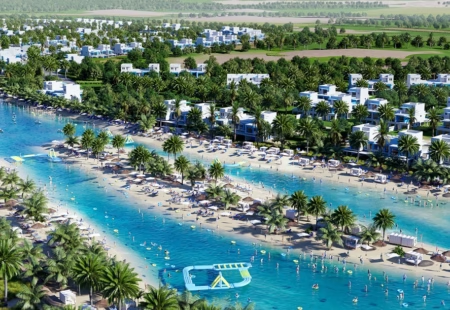
DAMAC Lagoons is one of the fastest-growing communities. It is designed around themed clusters such as Morocco, Malta, and Venice.
Buyers are attracted to the concept, pricing, and payment plans. Most transactions here are off-plan. The area has strong growth potential.
DAMAC Hills and DAMAC Hills 2
These communities continue to generate steady transaction volume. They offer a mix of villas, townhouses, and apartments.
DAMAC Hills attracts mid-to-high income buyers. DAMAC Hills 2 offers more affordable options.
DAMAC Islands 2
This is a high-value segment. Luxury villas priced above AED 10 million are attracting premium buyers. Waterfront design and exclusivity are key drivers.
DAMAC’s growth is linked to rising demand for villas. Buyers are looking for more space and community living.
Binghatti Holding
High Volume Through Strategic Locations
Binghatti has become one of the most active developers by transaction volume.
Its model focuses on launching multiple projects in high-demand areas.
Key Communities Driving Binghatti’s Growth
Jumeirah Village Circle (JVC)
JVC is the most active community in Dubai by transaction volume. Lower entry prices and strong rental demand attract investors.
Rental yields range between 6% and 8%. This makes it one of the top areas for income-focused investors.
Binghatti has a strong presence here. Its projects drive a large share of transactions.
Business Bay
Binghatti is also expanding in Business Bay. Branded projects and central location increase its visibility.
Branded Developments
Projects linked to luxury brands increase Binghatti’s reach in the premium segment.
Binghatti’s strategy is based on volume, pricing, and location. This keeps demand consistent.
Meraas
Premium Urban Communities with High Ticket Size
Meraas operates in the high-value segment. It focuses on prime urban locations and lifestyle-driven developments.
Key Communities Driving Meraas Demand
City Walk
City Walk attracts end-users who prefer central living. It offers retail, dining, and residential spaces in a walkable environment.
Bluewaters Island
This is a premium waterfront location. Limited supply and strong demand support high prices.
Madinat Jumeirah Living
This community combines traditional architecture with modern living. It appeals to both local and international buyers.
Nad Al Sheba Gardens
This villa community is gaining traction among families. It offers space, privacy, and access to central Dubai.
Meraas focuses on fewer projects but higher value per unit. This keeps its positioning strong.
Nakheel
Expanding Waterfront and Island Living
Nakheel continues to lead in large-scale waterfront developments.
Key Communities Driving Nakheel’s Growth
Palm Jebel Ali
Palm Jebel Ali is one of the most significant luxury launches. Villas priced above AED 15 million are attracting global buyers.
Dubai Islands
This area is emerging as a future lifestyle hub. Projects like Bay Grove Residences are gaining attention.
Palm Jumeirah
Palm Jumeirah remains a stable and high-demand market. It continues to attract international investors.
Nakheel’s strength lies in large-scale coastal developments. These projects attract high-value buyers.
Danube Properties
Supporting Volume Through Affordable Housing
Danube plays a key role in maintaining transaction flow.
Its projects focus on affordability and flexible payment plans.
Key Communities Driving Danube Demand
Al Furjan
Al Furjan is gaining popularity due to affordability and metro access. It attracts both end-users and investors.
JVC and Dubai Residence Complex
These areas support Danube’s volume strategy. Lower prices increase transaction numbers.
Danube helps maintain market balance by serving budget-conscious buyers.
Community-Level Insights
Where Most Transactions Happened
Q1 2026 data shows that demand is concentrated in specific areas.
JVC leads in transaction volume due to affordability and rental yield. Business Bay remains active due to central location and mixed supply.
Dubai Hills Estate continues to perform due to infrastructure and planning. DAMAC Lagoons is growing fast due to villa launches.
Dubai Creek Harbour is gaining traction as a waterfront destination. MBR City attracts premium buyers.
These communities represent real demand. They combine location, pricing, and future growth potential.
Infrastructure Impact
Metro Blue Line Driving New Demand
Infrastructure continues to shape market trends.
Areas connected to the Metro Blue Line, such as Dubai Silicon Oasis and International City, have seen around 25% growth in transactions.
Improved connectivity increases accessibility. This directly impacts property demand.
Off-Plan Market Dominance
Off-plan properties accounted for over 72% of total transaction value in Q1 2026.
Buyers prefer off-plan due to:
- Flexible payment plans
- Lower entry cost
- New community launches
Areas such as Emaar South, The Valley, and DAMAC Hills 2 saw strong demand.
The ready market showed slower activity, especially toward the end of the quarter.
Investor Trends and Price Movement
Investor activity remains strong. Indian buyers lead with around 22% share.
Price growth remains stable:
- Average increase: 8% to 12%
- Prime areas: up to 15%
The pace of growth is stabilizing. This indicates a balanced market.
What This Means for Buyers and Investors
The Q1 2026 data provides a clear direction.
The market is shifting toward planned communities and off-plan supply. Buyers should focus on areas with strong transaction activity and future infrastructure growth.
Developers with strong delivery records remain a safer choice.
Communities with high demand and consistent supply are likely to perform better over time.
Conclusion
Dubai’s real estate market in Q1 2026 remains strong and well-structured.
Emaar leads through large communities. DAMAC drives villa demand. Binghatti and Danube support volume. Meraas and Nakheel lead in premium segments.
Communities such as JVC, Business Bay, Dubai Hills Estate, and Dubai Creek Harbour continue to drive activity.
This balance between developers and locations is what keeps the market stable and growing.
FAQ
Which developer leads Dubai real estate in 2026?
Emaar leads in both sales value and transactions.
Which areas are most active?
JVC and Business Bay recorded the highest transaction volume.
Why is off-plan dominating?
Flexible payment plans and new launches attract buyers.
Which communities are best for investment?
JVC, Dubai Hills Estate, Business Bay, and Dubai Creek Harbour remain strong options.
Is Dubai real estate still growing?
Yes. Growth continues at a stable pace.