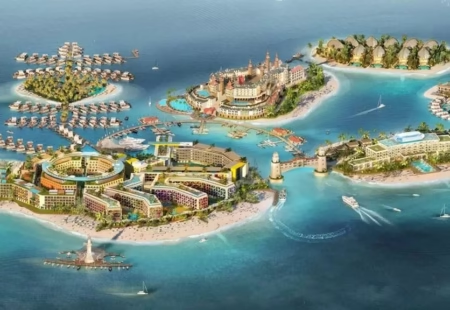
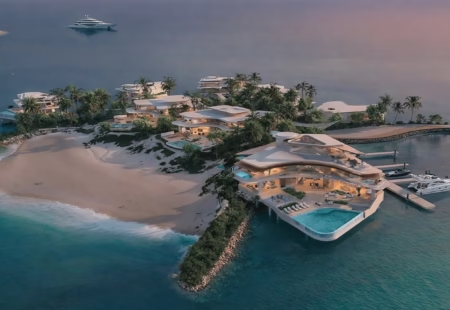
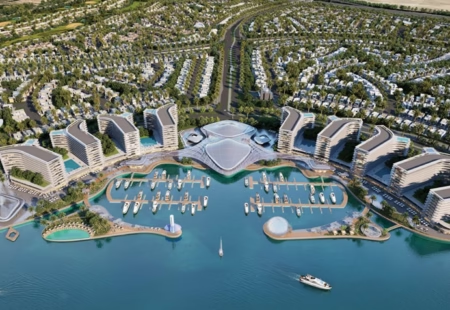
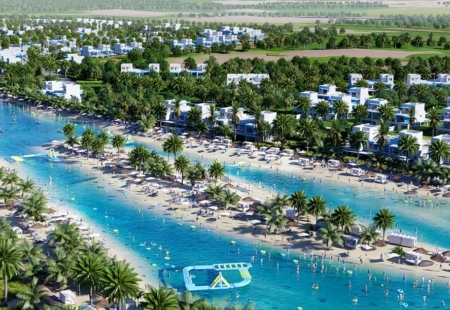
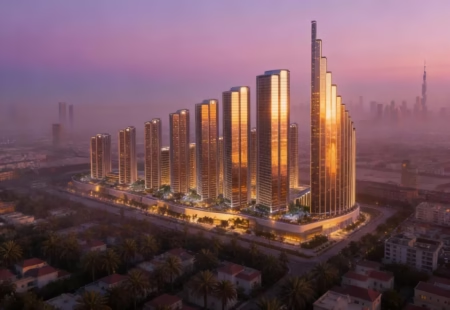
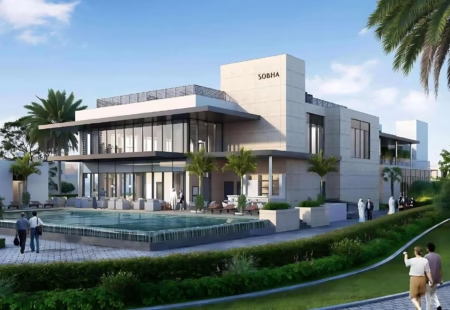
The World Islands is a large offshore development by Nakheel covering about 931 hectares, located around 4 kilometers from the Jumeirah coastline in the Persian Gulf. The community is planned as a group of man-made islands arranged in the shape of the world map with each island designed for private living, resorts or hospitality use. The layout is low-density with water separating every island, which keeps the surroundings quiet and less crowded compared to mainland areas. Each cluster inside the project has its own theme so some islands focus on villas, while others are planned for hotels, beach clubs and leisure spaces.
Several islands include private beaches, marinas and resort facilities, making the area function more like a self-contained waterfront district. Parts of the project are still under development with new resorts, branded residences and private island homes being built in different clusters. Because of its offshore location, the community is planned to offer more privacy and open space compared to most residential areas in Dubai.
Key Features
The community balances high-end residential zones with top-notch hospitality, all powered by eco-friendly solar & desalination tech. It is a car-free, green-focused escape where privacy is the standard, not a luxury.
- 931 hectares of car-free island living
- Direct 360-degree open sea and sky views
- Unique seahorse villas with reef views
- Private docks for seamless yacht access
- Mix of residential & boutique hotel zones
- 15-minute boat ride to mainland Dubai
- New 1km Raining Street climate control
Entertainment and attractions
This community keeps you close to some of Dubai’s most well-known lifestyle areas. The nearby locations work as the main support points for residents giving the comfort of city facilities while still living away from the usual crowd and traffic.
- Jumeirah Fishing Harbour
This is one of the main access points used by people going to and from the islands. The harbour is known for its small restaurants, seafood spots and relaxed cafes that have a more local feel compared to the bigger commercial areas. Because of this, it stays an important place for daily movement, deliveries and general mainland coordination.
- Kite Beach
Around 8 kilometers from the islands, Kite Beach is the closest major public beach on the mainland side. The area is popular for outdoor activities with jogging tracks, volleyball courts, cycling paths and food trucks spread along the coast. The beach is well maintained and also works as a familiar reference point along the Jumeirah coastline.
- Dubai Mall & Burj Khalifa
Getting to the Burj Khalifa area usually means a short boat trip followed by about a 10-minute drive after reaching the mainland. This part of the city is where most residents go for large shopping malls, fine dining, cinemas and business offices.
- Palm Jumeirah
Palm Jumeirah is another nearby offshore destination that people from the World Islands often visit. Several charter boats and private transfers operate between the Palm and the islands, so moving between the two is quite common.
- Dubai Canal & Business Bay
The route toward the Dubai Canal sits close to the usual boat paths used when traveling to and from the islands. This canal connects the open sea to Business Bay and the Downtown area, making it useful for residents who prefer moving by water instead of road traffic.
Future of World Island
The World Island is slowly entering a more practical stage of development as Dubai’s Marine Transport Master Plan 2030 starts getting implemented. The plan includes expanding marine transport with more regular water taxi routes and a bigger fleet of faster shuttle boats.
With better ferry timing and the expected use of autonomous water taxis in the future, the distance from the city may feel less of a problem, which can naturally help increase buyer interest over time.
Along with transport the development is also moving toward creating self-sufficient island communities with their own small retail, dining and leisure zones. As projects like the Heart of Europe and Amali Island get closer to full completion, more facilities will be available inside the islands, so residents will not always need to travel to the mainland. From an investment point of view, price growth here depends a lot on how these lifestyle features are completed, including concepts like climate-controlled streets and underwater-style living spaces that are not common in other parts of Dubai.
Structure of the World Island
The overall layout of the World Islands covers around 931 hectares and is designed as one of Dubai’s most unusual offshore developments.
Distinct Continental Clusters:
The islands are divided into continent-shaped groups, each working like a small private neighborhood with villas, resorts and limited development.
Integrated Eco-Zones:
Some islands focus on greenery and sustainable living with gardens, shaded areas and solar-powered systems.
Commercial & Resort Hubs:
Selected islands include hotels, beach clubs and restaurants so residents have leisure options nearby.
Marine & Protective Infrastructure:
A 27-km breakwater surrounds the islands to keep the water calm, protect the shore and support marine life.
Why choose off-plan projects in World Island
One of the biggest advantages is the price difference at the early stage. As more island clusters get completed and start operating properly, the limited number of plots becomes a strong factor in price growth. Since there are only around 300 islands in total, this restricted supply often leads to natural capital appreciation by the time the property is handed over.
Payment plans in this project are structured for premium buyers but still follow flexible schedules. In many developments including projects in Amali Island and the Heart of Europe area, the booking amount starts from around 10%. Most of the active projects in the islands are currently expected to complete between Q4 2026 and Q1 2027 which also matches the timeline for transport links, hotels and other main facilities planned for the community.
At the launch stage, you can select better locations, such as villas facing the Dubai skyline or homes placed closer to the quieter reef areas. By the time these homes are handed over in the coming months, they will be among the newest luxury options in Dubai, which is why many investors expect strong demand later in both resale and high-end rental markets.
Off-plan projects in World Island
The World Island is currently going through a new phase of development with several high-end projects under construction across different island clusters. These projects focus on private living, resort-style services and unique concepts that are not common in mainland developments.
- Amali Island by Amali - 24 villas, private berths, skyline views
- Buddha-Bar Floating Residences - Hotel + rare floating homes
- Portofino InterContinental - Italy theme resort, indoor aquarium
- Marbella Resort Vignette - Spanish style hotel, Rainy Street
- Zuha Island by Zaya & FIVE - Private villas, eco beach living
Amenities and Facilities
The community is planned in a way where most facilities are built with a clear purpose. Open yoga decks and calm outdoor areas give residents space to relax away from city noise, while modern gyms and wellness zones help maintain an active routine. Private beach clubs create a social setting without the crowd you usually see in mainland resorts. Many of the outdoor areas are designed to be used daily with walking paths, jogging tracks and water-based activities that keep residents connected to the sea and open surroundings. The overall setup makes everyday life feel more balanced with a mix of privacy, fitness and natural space.
- Marine & Water Leisure - Private beach, pools, lagoon areas
- Fitness & Wellness - Gym, yoga, spa, sauna rooms
- Social & Dining - Beach clubs, restaurants, lounges
- Family Spaces - Kids areas, parks, family zones
- Sports Facilities - Volleyball, jogging, water sports
- Services & Marina - Yacht docks, helipad, concierge
Infrastructure and Connectivity
Travel from the World Islands mainly works through boat transport and the mainland can usually be reached in around 15 minutes depending on the weather and boat type. After arriving on the Jumeirah side, you are directly connected to some of the main roads and transport routes in Dubai which makes daily movement manageable even though the home location is offshore.
- Jumeirah Beach Road (D94) - Closest road from Jumeirah boat point
- Sheikh Zayed Road (E11) - Main highway, 10 min from coast
- Al Khail Road (E44) - Inner road, 15 min from Jumeirah side
- Sheikh Mohammed Bin Zayed Rd (E311) - 25 min, UAE highway
- Dubai Metro Red Line - Business Bay / Jumeirah side stations
- Marine Transport Points - Boats to Jumeirah & Palm Jumeirah
- Dubai International Airport (DXB) - 30-35 min from Jumeirah coast
Investment Insights
The World Islands gradually form a small but high-value real estate area where offshore living works differently from normal mainland communities. Because the total number of islands is fixed, many buyers look at the project as a long-term holding, especially as interest from international buyers who want more privacy often continues while the number of completed homes grows slowly.
Market data in 2026 shows that ready beachfront villas in the more developed parts of the islands usually target rental yields of around 5% to 6.5%. Serviced apartments, hotel-managed units and floating seahorse homes may reach around 7% to 9%, mainly because they are used in the short-term luxury rental market. At the same time, the location is still close enough to the mainland, so it can work not only for holiday use but also for people who prefer living in a quieter place while working in Dubai.
As more islands become active with their own beach clubs, marinas and transport points, resale activity is expected to improve, especially for homes with open sea views or views toward the Dubai skyline.
Tips for buyers
This community is a marine-based setup where movement depends on boats instead of cars. Because the number of islands is limited and no new land can be created inside the project, owning property here is often seen as holding a fixed part of Dubai’s offshore area.
Smart Buying Tips for The World Islands
- Check marine access and confirm boat timing and docking rights.
- Verify escrow account and ensure it is DLD approved.
- Compare price per sq.ft with Palm and Jumeirah.
- Confirm transport routes and mainland access.
- Verify power, water and utility connection.
- Visit the island and see the actual location.
Taking time to check these details properly can make a big difference, especially in an offshore project where location, access and infrastructure all play a major role in keeping the property valuable over the long term.