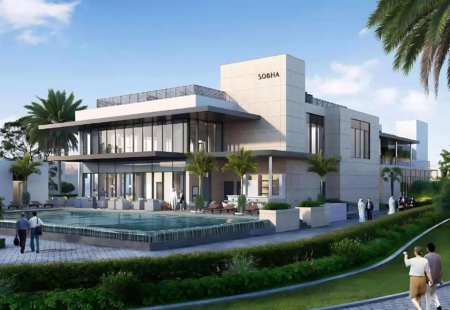
Dubai Studio City is one of the main media production areas in the region. It has large studios, creative offices and modern workspaces. The community was developed by TECOM Group and is part of DubaiLand. The total size is more than 22 million square feet. The area was first planned for film, TV and media companies, so the layout includes studio buildings, open spaces and landscaped roads. Over time, the district has also become a residential area where people choose to live.
The community includes facilities made for media production, including some of the largest sound stages in the Middle East, where many international projects have been filmed. Because offices and homes are in the same area, many people living here work in media, design or similar fields. This mix of work and living keeps the community active and helps the area keep steady demand in the Dubai property market.
Key Features
- Spread over 22 million square feet.
- Freehold studios to 3-BR apartments.
- Prime location along Al Qudra Road D63.
- High ROI from 275 active media firms.
- Gated residential and commercial blocks.
- Quick access to Al Barsha and Ranches.
- Middle East’s largest movie sound stages.
- Developed by TECOM Group and Dubai Holding.
Entertainment and attractions
Dubai Studio City is located in the New Dubai corridor and is close to many well-known leisure places in the city. The community itself is mainly built for media and production companies, but people living here can reach many popular locations within about 15 to 20 minutes by car.
- Dubai Autodrome and Motor City - Located next to Studio City, Dubai Autodrome has a 5.39 km race track, karting areas and quick access to First Avenue Mall with shops and restaurants.
- Dubai Miracle Garden and Butterfly Garden - Around 2 km away, this area has the large flower garden and indoor butterfly domes, both easy to reach in a short drive.
- Global Village and Expo City - About 6 km from the community, Global Village and Expo City can be reached by car in a short time for events, shopping and exhibitions.
- Dubai International Cricket Stadium and Sports City - Located next to Studio City, this area has the cricket stadium, sports academies, gyms and outdoor training grounds.
- Mall of the Emirates and City Centre Me’aisem - Mall of the Emirates is about 20 minutes away, while City Centre Me’aisem is closer for daily shopping, supermarkets and cafés.
Future of Dubai Studio City
The future of Dubai Studio City is closely connected to the Dubai 2040 Urban Master Plan and the Dubai Clean Energy Strategy 2050. The area was first planned mainly for media production, but it is slowly changing into a mixed-use business and residential district. New upgrades also include better transport access, modern workspaces and more efficient utility systems. The use of solar power and other eco-friendly solutions is part of the long-term plan, which helps the community stay ready for future growth. Because the city is expanding toward the south, areas like Studio City are expected to become more active for both living and business.
Property value in this corridor is mostly linked to the area’s role as a regional center for film, media and digital production. Investment in studio facilities and related industries keeps demand stable for both offices and homes.
Structure of the Dubai Studio City
The layout of Dubai Studio City is planned in a way that keeps busy work areas separate from quieter residential parts. The buildings in the community are mostly low-rise and mid-rise, so the area feels more open compared to the tall tower districts in central Dubai.
- Integrated Commercial & Media Zones
The main area has office buildings and studio spaces used for media, film, animation and design companies.
- Residential Apartment Clusters
Homes are mainly in mid-rise buildings like Glitz 1-3-BR with studio to 3-BR apartments designed for people working nearby.
- Mixed-Use Podium & Retail Levels
Many buildings have shops, supermarkets and cafés on the ground or podium level, so residents can access daily needs within the same building.
Why choose off-plan projects in Dubai Studio City
Buying off-plan property in Dubai Studio City is one way to enter a free zone that is still growing and adding new buildings. Prices at the launch stage are usually lower than ready units, so buyers can book an apartment with a smaller starting cost. The expansion of the community matters here because the master plan covers about 22 million square feet and some plots are still empty and planned for future projects.
Developers in Studio City often allow small down payments and installments linked to building progress and some projects also give post-handover payment options. Several projects in the area are expected to complete between 2026 and 2027, which also matches road and infrastructure upgrades happening around this part of Dubai, including work on Hessa Street.
Recent projects often include smart-home features, energy-saving systems and shared spaces like gyms, garden areas and quiet zones for relaxation. These ideas follow the direction of the Dubai 2040 Urban Master Plan. Buying before completion also allows buyers to pick the unit position and view, whether facing open spaces, streets or the studio side of the community, depending on their long-term living or rental plans.
Off-plan projects in Dubai Studio City
Dubai Studio City is getting many new residential projects and several buildings are still under construction. These off-plan options give buyers a chance to enter the area while new buildings are being added with modern designs and updated building systems.
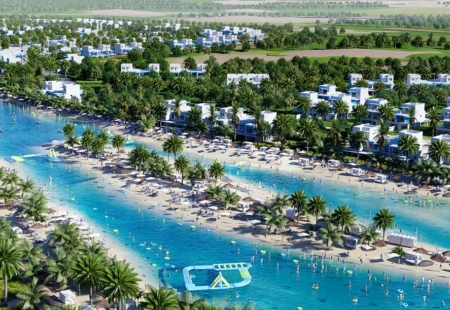
- Azizi Beach Oasis 2 - Low-rise project with lagoon pool and beach-style design, offering studios and 1-2-BR units, expected completion around 2026.
- Arisha Terraces - Four-building residential project with central courtyard and large amenity area, planned with energy-saving design, expected completion around 2026-2027.
- Samana Mykonos - Greek-style building with private pools in some balconies and modern layouts, under construction with handover expected around 2026.
- Laya Courtyard - Boutique residential building with post-handover plan, rooftop deck and padel court, expected completion around 2026.
- Verano by Prescott - Mid-rise project with cinema room, co-working space and leisure pool areas, currently under development with expected completion around 2027.
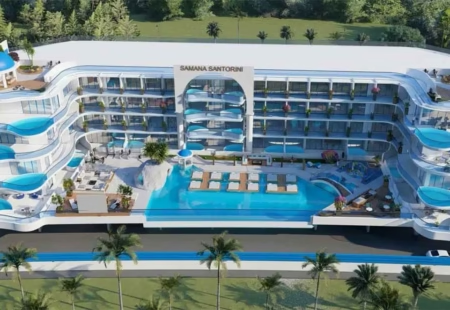
- Samana Santorini - Resort-style project with terrace pools and themed design, under construction with handover expected around 2026-2027.
- Ryah Living - New residential project in early construction with modern layouts, expected completion around 2027.
Amenities and Facilities
The area was built for the media industry, but the residential side is designed to feel calm and comfortable. Roads, buildings and shared spaces are arranged so that daily needs, fitness and relaxation facilities are available inside the community. Many buildings include gyms, walking paths and open garden spaces that make it easier to keep an active routine. Quiet landscaped areas and sitting zones are also common, giving residents places to relax after work. For people working in media, design or business, having creative offices and living spaces close together makes daily life more practical.
- Swimming pools, kids pools and rooftop leisure decks are available in most residential buildings.
- Gyms, yoga rooms, sauna and steam facilities support daily fitness and wellness.
- Sports courts, jogging tracks, walking paths and landscaped parks are spread across the community.
- Children’s play areas, BBQ spaces, mini-golf and indoor halls are provided for family and social use.
- Sound stages, studio offices, recording rooms and workspaces are available for media and freelancers.
- Supermarkets, pharmacies, cafés, restaurants and salons are located within the retail areas.
- Schools, training centers, clinics and hospitals are located in nearby communities.
Infrastructure and Connectivity
Dubai Studio City is a well-planned area located close to some of the main road networks in Dubai. Because of this location, residents can reach business districts, beaches and shopping areas without long driving time.
Al Qudra Road (D63) and Hessa Street:
These two main roads run next to the community and connect directly to E11 and E311, which are the main highways used for travel across Dubai.
Dubai Internet City Metro Station:
The closest metro station is about 10 minutes away by car. Feeder buses like F30 and F32 connect the station with nearby communities.
Mall of the Emirates:
This mall and transport point can be reached in around 15 minutes using the main road connections from Studio City.
Downtown Dubai and Burj Khalifa:
The central business and tourist area of Dubai is usually about a 20-minute drive, depending on traffic conditions.
Dubai International Airport (DXB):
The main airport of the city can be reached in about 23 minutes using the fastest highway routes.
Al Maktoum International Airport (DWC):
This airport is around 20 minutes away and is closer to the southern side of Dubai where the city is expanding.
Sharjah and Northern Emirates:
Travel to Sharjah is about 50 km from the community and usually takes around 40 minutes or more, depending on traffic.
Investment Insights
Dubai Studio City is a well-established free zone in the UAE property market, covering more than 22 million square feet. More than 275 media companies operate here so many people working in these offices prefer to live nearby. At present, studio apartments give around 8.60% return, while 1-BR units are close to 7.86%. Larger 3-BR apartments are usually near 7.00%. Price growth in this area is normally moderate, around 4-6% per year, which makes it suitable for buyers looking for long-term holding rather than short-term speculation.
Average yearly rent for apartments is usually between AED 45,000 and AED 80,000 and many tenants are mid-income professionals working in nearby areas such as Motor City and Dubai Sports City. For buyers focused on rental income, the community often shows strong occupancy levels and steady returns, sometimes performing better than nearby areas like JVC, which makes it a practical option for a balanced Dubai property portfolio.
Tips for buyers / concluding remarks
The community is mainly made up of apartment buildings, not large villa communities but the location near Hessa Street and other main roads makes daily travel easier. Because many professionals work in this zone, rental demand usually stays steady, which is why the area is often considered a stable option for long-term living or investment.
- Traffic on main roads can be heavy in the morning and evening, so travel time may be longer during working hours.
- Studios and 1-BR apartments are the most common here, while large units and villas are limited.
Most schools and hospitals are in nearby areas and usually take around 8 to 10 minutes by car.